doubt · relationships · self-care

Calculus

calculus

There is a subtle, ever-present equation being solved in my brain by the minute.  To be happy in this moment, do I need a little more rest or a little more activity?  To be happy in this lifetime, do I need a little more savings or a little more spending?  To be happy in this relationship, do I need a little more stability or a little more spontaneity?

This weighing and measuring circulates incessantly that old GPS tagline beneath all my thoughts: “Recalculating.”

I’m listening to the audiobook of Gretchen Rubin’s Better Than Before, a book about the formation of and adherence to habits.  Of the 4 tendencies she describes, I most clearly identify with “The Obliger,” with some elements of Questioner, Upholder, and Rebel.  As an obliger, I am most apt to complete something I’ve set out to do if I have accountability.  In fact, all the positive habits I’ve formed over the last dozen years, I realize, have been as the result of making an explicit or implicit pact with someone (or something, like a daily vitamin pill dispenser):

  • Stay Sober & Solvent?  Accountable to a group of people doing the same.
  • Run a 10K?  Accountable to a running group doing the same.
  • Write Morning Pages?  Accountable to my Artist’s Way group from 2008.
  • Make fresh coffee in the morning (instead of nuking one pot all week)?  Accountable to my boyfriend’s insistence that I have nice things!

What harangues me is the more insidious obliging that I engage in, where the motivation is much less clean:

  • Return the guilt-inducing phone call from my father?  Accountable to:  A) “Good daughter”ing or B) Genuine desire.
  • Remain a mentor to someone who is clearly not a fit?  Accountable to: A) “Good mentor”ing or B) Saving them from themselves.
  • Stay in a relationship peppered with my doubts from the start?  Accountable to: A) My partner’s wishes; B) Saving my partner from himself; C) My mom(!); D) My genuine desire for and love of him.

Where does my obliger nature veer into codependence rather than self-support?  And with every new piece of information — with every glance, hug, laugh, anger, sorrow — I calculate again, an always-running app in the background, doomed to refresh infinitely.


courage · love · strength · vulnerability

Going Soft.

9 2 17 marshmallow

I was in a book study a few years back with a Man, capital M.  He was tall, burly, a hefty, baseball-cap, sports t-shirt wearing Guy.

As we went around the room sharing why we were there and what we hoped to get out of it, this Man said he was afraid this process would turn him into a marshmallow.  That at the end of this, he’d be weak and soft, that opening to his humanity would expose him irrevocably.  We nodded in shared understanding.  Opening oneself is never easy, as our ego-minds — flashing warning signs — remind us repeatedly.

By the end of the year-long group, this Man was indeed softer.  He laughed more easily, he shared more deeply, he allowed his vulnerabilities to be witnessed.  He had turned into a marshmallow.

He had also turned into an entirely stronger version of himself.  His vulnerability and humanity made him approachable, communal, and this community strengthened him further.  His supposed “weakness” was now a great strength, showing confidence, authenticity, and self-possession.

I, myself, am being called to soften, particularly in my romantic life — perhaps one of the most intimate places we are called to grow.

In his kitchen, in his arms the other morning, I said to my boyfriend, “You’re going to melt me.”

Like the Man of the book group, I am scared that my melting will expose me.  Will lay me vulnerable…  To what?!, I have to ask myself.  Oh, Love, you are so misinterpreted by me:

Love lays you open to breakage.  

Love, my fear touts, is a sedentary bull in a china shop: You’ll be picking up broken pieces sooner or later.

But, I am not a china shop and my inner world is not a precious porcelain museum.  It is a dynamic, industrious candy factory. (…Sure, why not!)  And allowing people, a person, a beloved person into that factory, well, I can only see that he will appreciate my colors and flavors, and help me see that I can do the same of myself.  And of him.

For many years, Love has been dressed (and addressed) as a risk.  But really, it’s just a curious visitor hoping for something sweet.

abundance · joy · scarcity · time

Chunk.

chunk 8 20 17

During a professional development on Executive Functioning last week, they expressed the need for students to Chunk.  “Chunking” is looking at the big picture of an assignment and breaking it down into bite-sized chunks of Time.

Have a 5-page paper due in 2 weeks?  Here’s how you back-track and pencil in smaller tasks… so it’s not the night before with 5 empty pages before you.

To varied success, I use a chunking practice for my own time, much as I use a spending plan for money.  To write my “time plans” I sit with a hot cup of coffee, a fresh piece of paper, and (most importantly) a pencil.  From there, the first item is always, “8 – 8:05am: Coffee and Time Plan.”  And I catalogue the day’s tasks on.

The frothy thing about a time plan is that it’s…fluid.  Moveable, crunchable, expandable.  And by “frothy,” I mean “maddening beyond all belief.”  Took 6 minutes to write your time plan, not 5?  Mom call you at 8:10, during your 30-minute journaling?  Run into a friend at the store and spend 15 minutes in a chat? **Eek!**

Time plans are fluid because my day is not a Swiss clock.  I find this troubling.

When I put my time into a plan, I feel like I have order, control over my day, my life, my emotions, destiny, successes and failures. But time, and experience, are wily bitches and I can’t pin them down any more than a mud wrestler.

Because I’m scared, much as with money, that there will never be enough. Our time here is short.  Yet I don’t want to strangle life so firmly that I don’t enjoy it!

Time is not to control, but to partner with. Time is a kid running up a forest trail ahead of you, then lagging behind to witness a beetle’s progress up a leaf.  I must be open to that fluidity… but I also must have a general map of our path through the forest.

There can be side trips and cavorting in crystal streams — indeed there must be, or I shall die — but without a destination, I am too lost in the forest of life (and procrastination and Netflix).

So my task for now is to be looser with my time, to recognize the abundance of it.  To deeply know that if I aim my time in the direction of my dreams, there will always be enough — whether or not I finish my blog at 8:55am.

abundance · denial · deprivation · money

Use Water, Not Tears.

buckets_2 8 18 17

I’ve been very specific about tracking my money for a few years.  Specifically putting a large portion each month into various savings buckets: Prudent Reserve, Vacation, Dental, Retirement.

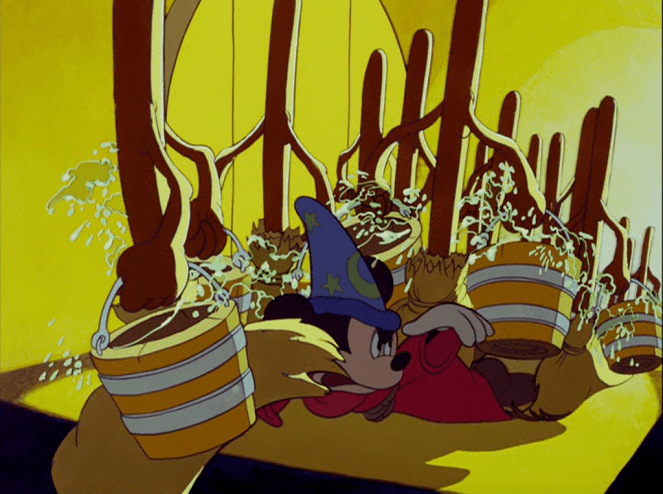
Every month, I’ve poured some of my abundance into a bucket, but today I come to find that I have been hoarding it.  Like an off-the-grid nut job, I’ve surround myself with “In Case of Emergency” water buckets while my crops wither and die of emergency thirst.

Because of my summer of switching jobs, I only earned half-pay for August.  Instead of using my already-filled buckets of money (e.g. my savings) to make up for that gap, I winnowed every spending category down:

Food? Spend Less!

Home supplies? Spend Less!

Philanthropy, clothing, entertainment? Spend Less! Need Nothing! Go hungry!

I have a pattern for this.  No matter how much I earn, I live like a pauper.

And this morning, I realized what the hell is the point in having a reservoir if you refuse to use it during a drought?

Instead of using the gifts I’ve already been given to support me during a time of need, I tell myself to have fewer needs?

That’s what got me on the “very strict about money” train in the first place: Not acknowledging, honoring, and supporting my own needs, but denying them.  (You may by now realize that money is just one symptom of a pattern exists in the rest of my emotional life…)

Need less, be less, have less, do less, share less, laugh less, enjoy less.

And, indeed, joyless is how I’ve felt this month as I watched my field dry and crack while stubbornly refusing to look at the bountiful well that I’ve already filled.

I’m stubborn about that well.  I’m stubborn because I fear if I take anything from it, there won’t be more.  Ever.  If I use the abundance I’ve been given, there may come a day when it ends.  But, dude, that’s the fucking point!  Today, this month, is a month when the money stream dried up — so USE WHAT YOU HAVE SAVED!!!

It all seems so simple when you type it in capital letters… but this lesson, the lesson that says, “Feed and water your-fucking-self, Molly!” is one that I am still very slowly (and even painfully) learning.


balance · money · relationships · writing

Early Bird and the Gimme Gimmes

libra 8 17 17

Today, I write you from the lounge in the building at my new school.  I wanted to see what traffic would be like if I tried to arrive on time for teaching, rather than on time for our faculty work day.

I wasn’t on time.

Even leaving before blogging, an hour in advance, I wasn’t on time for what will need to be my settling in and minor morning prep, particularly as Monday mornings will find me teaching from 8:02am to 12:20pm, with one 15-minute break.

… Oy.

In a continuation of the Efficiency and Effectiveness in the World theme, it is likely that I will change this from a daily blog to a weekly blog starting Sunday.  I don’t want to do this. I like the process of writing you everyday, but to touch on the relationship theme I’ve also been jamming on, it’s also got to work for me.

Part of the reason I want to continue writing daily is a grasping one: I want to make money.

What??

Stick with me here:  There are several people in the world who have established a name and a voice for themselves via their blog, and then published a successful (even moderately so) book in the world.  I’d like to be one of them.

I want to publish a book because, a) I feel like a book is supposed to happen (likely several, of different genres), and b) I want to make money.

Ha!  Oh, Molly, your grand schemes and designs.

There’s nothing at all wrong with wanting to make more money, but if I think that my creativity is obliged to bring that to me, I’m sorely mistaken.  If as a natural, ancillary byproduct of Reason A (to write because I need and want to write), I arrive at Reason B, grand.  But I cannot make them the other way around.

Which is sort of what my attachment to writing this daily would be (to court, sustain, and curry your devotion), particularly if that was to mean waking up at 4:30am, instead of the current 5:30am.  (Did I mention I already have sleep problems??!)

I want your eyes; I hunger for your revelations and communion.  And because of that desperation, I will lose myself and you, not necessarily in that order.

So, lovely readers, our relationship will have to morph and evolve as both our needs evolve. We’ll have to support each other as best as we can as we work to support our selves. Sounds healthy, no?

growth · love · relationships · wounding

Emotional Cheesecloth

cheesecloth 8 16 17

I’ve been thinking about the savior role.  About my shoving an apple into the mouths of others, nearly before they’re open because I have all the answers anyway.  How I manicly (and maniacally) attend to your needs, taking me from attending to mine.

But, there’s something else I need to learn:  how to sit with others’ suffering.

When we’re born, we’re like a house without a gate.  We throw the doors wide and absorb everything life offers.  As we grow, we begin to realize that, “Hey, wait, not all this stuff is good stuff.”  Suddenly, in our emotional house there form mountains of other people’s shit — stuff that’s overflowing or untenable in their own homes being shoved into ours.

Some of the stuff that comes in is indescribably good.  Generosity, color, laughter, awe.

But, with our doors wide open to all comers, we can begin to feel overwhelmed, maybe even resentful: There’s a storage facility down the street, lady.

And so, we begin to put up fences.  Maybe walls, maybe even security guards, or those boiling-oil pouring soldiers who cry, Keep the Fuck Out.

Because stuff is thrown at us so quickly, there becomes little time to discern its value.  (Even the city dump makes you weigh and measure your crap before they take it in.)  And perhaps your doors have been so widely open, you’ve become a drowner in a sea of rot, so that you say to yourself, you know what, I don’t want any of it.

Sometimes, though, you have a chink in that wall somewhere, and people or ideas or experiences sneak in.  Sometimes, they’re so marvelous, you are dumbstruck by how desolate and isolated your house is and how abundant and gorgeous Life is.  And so you invite that person in.  You fall in what you call love, and you have found salvation in that person who is not going to give you any more shit and may even help you clear out some of yours.

But.  People are complex.  And when, as is laughably inevitable, the cycle of realization turns from “Salvation!” to “Oh, crap, you’re Human,” that crash can lead a person to kick their loved one out.  Out, out, out.  You’re complex!!  I have no room for that.  No time for that!  Too much, too human.  Out.

It is not my “picker” that is broken; it is my emotional resilience.  The fortitude to sit with another’s humanity without absorbing and storing all their crap and without kicking it all so far to the curb their new address is China.

I am not good at this yet.  I am not good at not shoving apples into people’s mouths, allowing them to have feelings without my neeeeding to “solve” them.  I am not good at remembering people aren’t projects.

I also have very little experience simply sitting with others’ stuff without running away or growing cold.

What I need is reweaving.  My netting had been too wide in youth and I drowned.  My netting is now too narrow and I reject.  There is a human-sized webbing which allows for inflow and outflow, which allows me to speak up when you really are putting things in my house that shouldn’t be but also lets me sit with your things that are uncomfortable to me without becoming an ice queen.

I want love, healthy love, but that comes attached to humans.  So I must learn to let you be one.


abundance · mortality · self-care · time

The Teapot Enables You

teapot 8 15 17

You must note the way the soap dish enables you,[…]
The kettle is singing even as it pours[…], the cooking pots
have left their arrogant aloofness and seen the good in you at last.

David Whyte, Everything is Waiting for You

My coffeepot, perhaps like yours, is electric with a clock and an auto-brew timer feature.  I have never in my ownership used this feature.  Until today.

Because of my new work schedule, new commute, and the relaunch of my daily blog, I am currently awakening at 5:30am, and it will have to be earlier once we move from “teacher prep” days to “omigod the students are here!” days next week.

Each morning past, I have woken up, pet my cat hello, and klutzed open the machine’s lid to pour in new water and grounds.  (For my own good, I have been forbidden by my boyfriend to brew a whole pot to drink throughout the week via microwave swill reheating…!)  This takes about 10 minutes from alarm to first sip.

But, this is inefficient in the industrial, technological age; I need my teapot to enable me.

Last night, for the first time, I pre-loaded my coffeepot with its daily matter and as I pet my cat and yawned in darkness this morning, I was greeted by the glug glug of the machine doing its work. I bumbled into the kitchen, ready to sip.

This may seem simple, banal even, but it’s progress for me.  For several years now, one of my aims has been efficiency, effectiveness.  Wanting to use the time I have on Earth performing actions that are aligned with who I want to be.  I don’t want to be the groggy-eyed medusa filling a daily water reservoir; I want to be the slightly-less groggy-eyed medusa sitting down to her daily journaling, meditation, and blog.

The coffeepot enables me to do this. Enables me to be present in the work I truly want to do (writing, creating, discovering, softening), rather than inefficiently toiling at Sisyphean tasks.

In this way, the coffeepot gets to fulfill its purpose and I, ten regained minutes at time, get to fulfill mine.


adulthood · family · love · service

Collecting Grown-ups.

Diane, Manny, Howard, Ralph, Max, Rhoda and Ruth

There is a curious trend in my social life lately: the appearance of older men.

I don’t mean in a romantic sense, but supportive, creative, interesting, helpful people, who happen to be men, who happen to fall logically into a model of fatherly or grandfatherly figures.

As for my own father, we haven’t spoken in months.  But boundaries, parents, duty, love, and obligation can be another blog… or several.

Yet, in the absence (of my own making or not) of an actual non-judgmental shoulder-to-lean on with wise, bolstering words to live by with stories of travel and far-flung adventure from times of yore father, I find myself being buoyed by just the type of love and support I’ve been missing.

Recently, I helped my 90-year old friend clear out decades of junk from his house and put it up on a craigslist ad.  While I sorted his old china and hauled pieces of moldy ikea furniture to the curb, he stood in the near-autumn sun, white-haired and tanned from his daily sun lamp, and told me about the time he and his wife were picked up by the police in the Ukraine, behind the Iron Curtain, in the 70s.  How a gorgeous Russian woman waltzed into the scene and argued for their release, so that they were then driven, inexplicably, right to the airport they’d been seeking.

He told me how he met his wife over a piano playing Chopin in Berkeley, their subsequent whirlwind courtship leading to a honeymoon trip to a Warsaw house concert in Chopin’s own living room.

My grandparents all passed before I got the chance to learn their stories.  To learn and ask how they met, what it felt like to be a child then, how the world worked before me and this and us.  I feel I’ve collected a friend who can connect me to that wisdom and joy and near-forgotten universe a grandparent can give.

The neat thing to me about gathering these new friendships in adulthood is that they’re…unadulterated…by familial angst and don’t depend upon one person to give me all that I need.  I get to have the love without the drama, the support without the strings, and I feel like I get to give them something they might have been missing, too.

addiction · death · grief · humility

The Cover of Rolling Stone

rolling stone 8 13 17

Last night, I attended the memorial service for an old friend.  He was 28.

Brash, brilliant, and evidently too kinetic for this world to keep onto, his mom shared this thought with me afterward:

“Everybody dies sometime.”

It wasn’t meant callously, but perhaps offered as an anchor in a sea of questions.  Or as a comfort that death is inevitable so we mourners can stop struggling against its perpetual manifestation.  Or, perhaps this thought relieves us of our self-centered individuality and apartness.

But… man… screw that.

There are some deaths that feel tragic, and some that do not.  Culturally, we seem to have created “approved of” endings, ones that feel complete for everyone and bestow dier and witness with a sense of closure and acceptance before the final breath.

Unanticipated deaths like these take post-acceptance.  They require sitting with the scorched wound of it, only later softening into resolution and peace with the past (which is truly the only way we get to court the past).

Knowledge of our universal eligibility for a sudden ending nevertheless makes many of us ungraceful when it actually occurs, tripping over our feet in a tear-stained stumble toward acceptance.

And in its wake, we tell stories.

The stories we’d written for Dez were ones of glory.  Stratospheric rises, magazine covers, and guitar riffs that broke into the hearts of more than we, his mourners.  Or perhaps we wrote humble stories, of a life well-lived with a guitar well-loved, a wry laugh, a crinkled eye . . .

But in a life’s passing, stories turn into something else: memories.  Memories become monuments.  And monuments are never who that person was anyway.


attachment · detachment · spirituality · work

“I am your Density…”

lotus-on-fire-3-lyle-barker 8 12 17

I’m sitting in a booth across from my friend before we head to a 40-minute silent meditation followed by a “dharma talk.”  We’ve done this for the last few Friday nights in a row, and we’re arguing (“discussing”) the concept of releasing attachment.  Our difference lies in the fact that I like attachment.

“So, am I not supposed to love my little brother,” I ask combatively.  Am I not supposed to want things, to want to feel connection or connected?

My friend is clear that this is not what non-attachment means, … but she’s also clear that it sort of does.

This morning, a decade later, I’m listening to the latest of the 21-day meditation challenges put out by Oprah and Deepak Chopra called “Desire and Destiny.”  One point Deepak shared today illuminated this irritation for me:

Desire is often interpreted in spiritual philosophies as a selfish distraction which, when indulged, pulls us away from our connection to Spirit.  I believe that desires are seeds planted within to do just the opposite.

I appreciated hearing this from a “spiritual teacher,” as it’s a departure I’ve long held between myself and (what I interpret to be!) the teachings of Buddhism or practices like it.  I do want to be attached — I want to suffer from grasping at my desires and my relationships.  I want to stoke and spark and rail against and fall apart into the yarn-pulls of my heart and discover what it is they mean for me.

If I don’t attach to them, how can I learn from them?

The subtle-til-they-become-violent nudges of my desires recently led me out of a career that was killing me.  A friend suggested during that time that I stand at the copy machine and repeat to myself, “I am grateful to be standing at the copy machine.”

. . . I was not.

And later rather than sooner I made my way into a new career that fuels, inspires, and scares the hell out of me.  This shift has brought me into a deeper relationship with and authenticity around how I earn a living that I don’t believe “Detach and Accept” would have taught me.

My attachment to worldly things often wreaks miserable havoc on my serenity, but there has never been a time when it hasn’t also led me toward a richer understanding of myself, and my destiny.